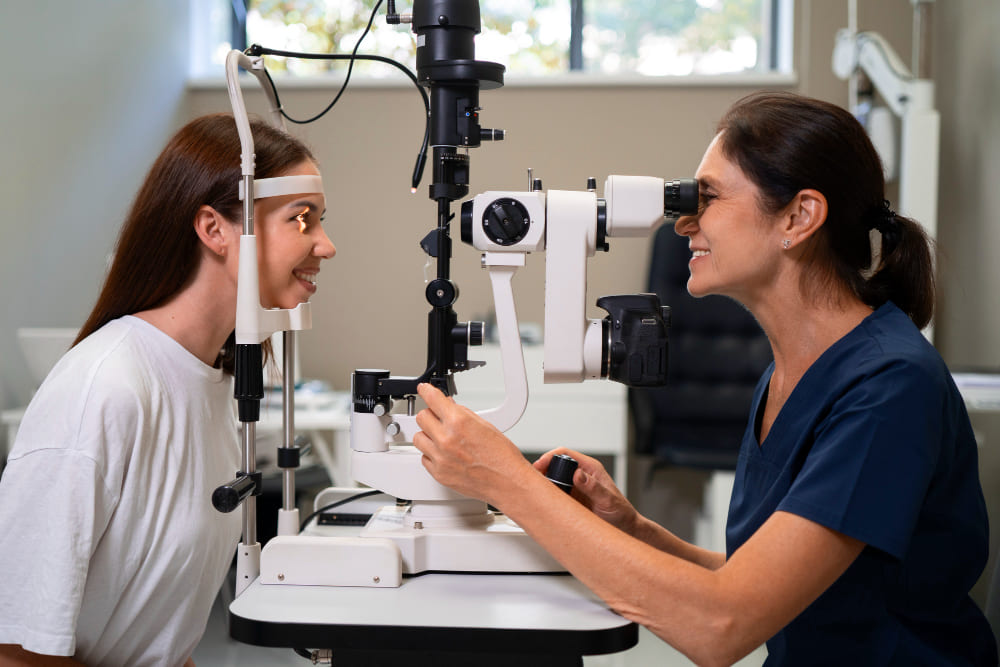
Contact lenses aren’t a one-size-fits-all product, even though it might seem that way from the shelf at a pharmacy. Every eye is shaped slightly differently, which is exactly why fittings exist.
Skip this step, and you risk discomfort, poor vision, or worse — eye irritation that could’ve been avoided entirely. Here’s what actually happens during a proper fitting.
Why Fittings Aren’t Optional
Contact lenses sit directly on the surface of your eye, so fit matters more than with glasses. A lens that’s slightly too tight or loose can cause real problems over time.
Beyond comfort, an improper fit can affect how well oxygen reaches the cornea. That’s not something worth guessing at.
What Happens During a Contact Lens Fitting
Step 1: A full eye health check
Before anything else, your optometrist checks your overall eye health and current prescription. This confirms contacts are actually suitable for you.
Step 2: Measuring your eyes
Your cornea’s curvature and your eye’s overall shape get measured precisely. These numbers determine which lens size and type will actually fit properly.
Step 3: Choosing the right lens type
Soft, rigid, daily, monthly — there’s a lot of variation. Your optometrist will recommend a type based on your prescription, lifestyle, and how your eyes respond to the initial trial.
Step 4: Trial and adjustment
You’ll usually try a sample pair in the clinic. This lets your optometrist check how the lens sits, moves, and settles before finalising anything.
Step 5: Learning to insert and remove lenses
If you’re new to contacts, this part takes patience. Most people get the hang of it within a session or two, with proper guidance.
Step 6: Follow-up appointment
A follow-up check, usually within a couple of weeks, confirms the lenses are working well and haven’t caused any irritation.
How Opticians in Tamworth Approach Fittings
Local practices tend to build in more time for questions and troubleshooting compared to rushed high-street chains. That extra attention often makes the difference for first-time wearers especially.
Opticians in Tamworth offering contact lens fittings generally walk patients through each stage carefully, rather than handing over a box and sending them on their way.
What to Expect If You’re a First-Timer
Nerves are completely normal. Most people worry about touching their own eye, and that hesitation usually fades within the first couple of tries.
Your optometrist will guide you through insertion and removal step by step, checking your technique before you leave. Rushing this part rarely ends well, so a good clinic won’t push you out the door before you’re confident.
Signs Your Fitting Might Need Adjusting
Even a good initial fitting can need tweaking. Watch for:
- Persistent dryness or irritation
- Blurry vision that doesn’t clear after blinking
- A lens that feels like it’s slipping or moving too much
- Redness that doesn’t settle within a day
Any of these are worth mentioning at your follow-up, rather than just pushing through discomfort.
Finding a Practice That Gets the Fitting Right
Not every practice offers the same level of care during a fitting. Ask how long appointments run, and whether follow-up checks are included as standard.
A practice willing to spend proper time on both the initial fitting and the follow-up tends to get better long-term results for their patients.